

Aurora & Helios
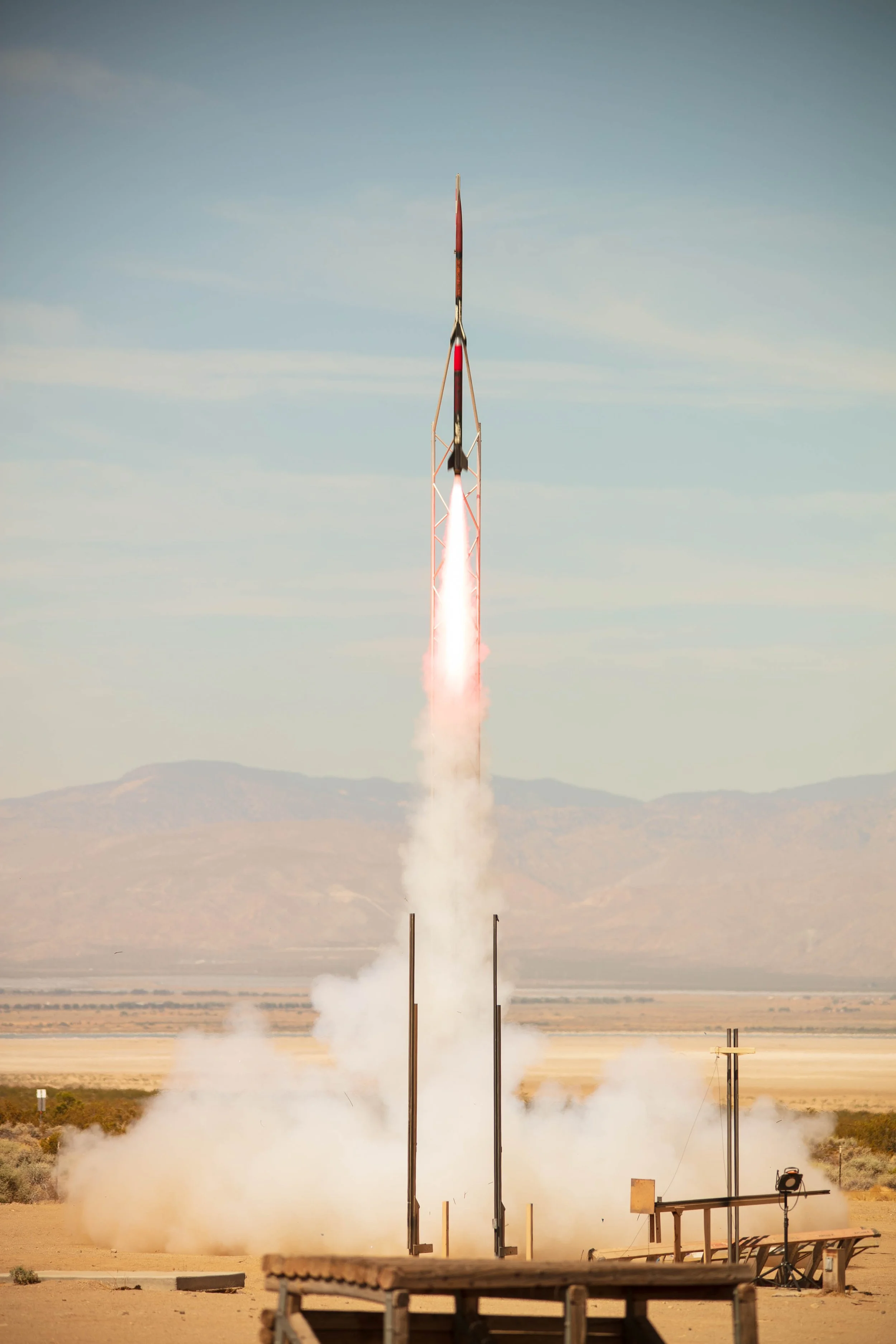
Designed to reach a projected apogee of over 100,000 feet, Aurora & Helios successfully executed dual-stage ignition and clean stage separation, followed by nominal parachute deployments. The booster stage, Helios, and the interstage were successfully recovered after flight. During ascent, an avionics malfunction resulted in the loss of telemetry at approximately 72,000 feet, preventing confirmation of the vehicle's final altitude and recovery of the sustainer stage, Aurora. Despite this setback, the mission demonstrated the team's ability to design, manufacture, and fly a successful high-altitude two-stage rocket.
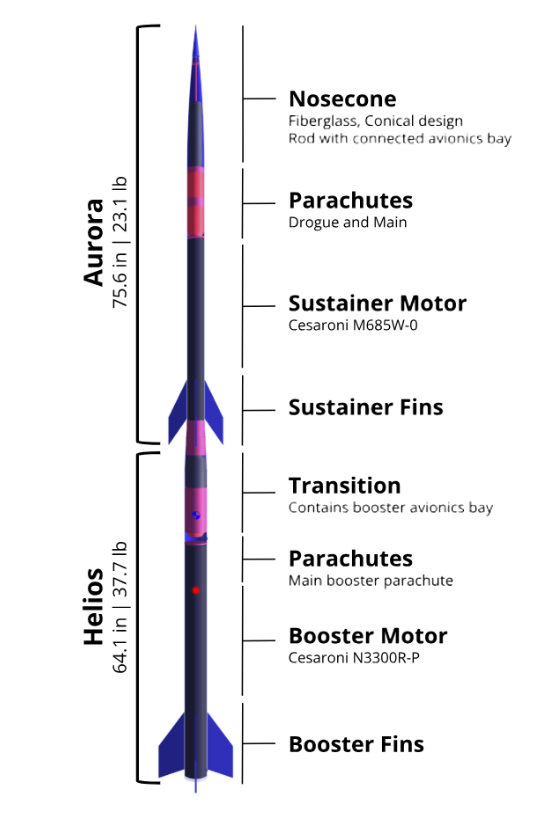
Aurora & Helios is Rice Eclipse's high-altitude dual-stage rocket, launched from the Friends of Amateur Rocketry (FAR) site in the Mojave Desert during the summer of 2026. Designed as the club's highest-performing launch vehicle to date, Aurora & Helios featured a carbon-fiber airframe with a Class M motor sustainer and a Class N motor booster. The sustainer utilized carbon-fiber body tubes with tip-to-tip composite fin reinforcement, while the booster incorporated fiberglass fins, a fiberglass transition, and nosecone to balance strength, manufacturability, and RF transparency where needed. A custom-designed and interstage, machined in-house, connected the two stages and enabled reliable stage separation.
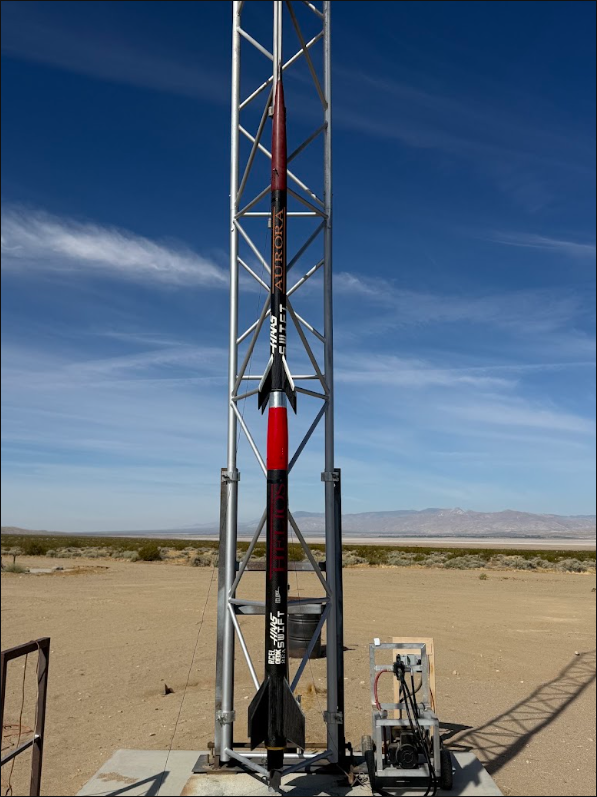
Aurora & Helios represents a major milestone for Rice Eclipse and serves as the foundation for the club's future Space Shot program. As Eclipse continues refining high-performance composite structures, avionics, and staging systems, the lessons learned from this flight bring the team one step closer to achieving its long-term goal of reaching the Kármán line.